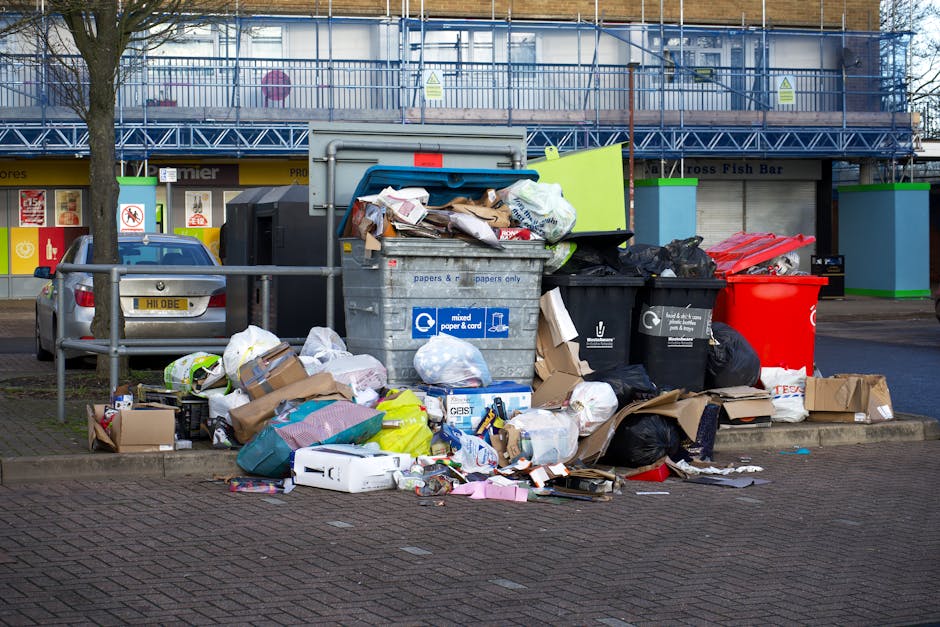
Avoid hidden charges for rubbish removal in Bermondsey
Posted on 23/10/2026

Avoid Hidden Charges for Rubbish Removal in Bermondsey: A Practical Guide to Clear, Fair Pricing
If you have ever booked a clearance and then felt the final bill creep up with mysterious extras, you are not alone. Hidden charges can turn a straightforward rubbish removal job into a proper annoyance, especially in Bermondsey where access, parking, and mixed property types can all affect the quote. The good news? You can avoid hidden charges for rubbish removal in Bermondsey by knowing what should be included, what should be queried, and how to compare services without getting caught out.
This guide walks you through the real-world details: how rubbish removal pricing usually works, the warning signs of a vague estimate, what to ask before booking, and how to keep your costs under control without cutting corners. It is practical, local, and meant to help you make a calmer decision. Because let's face it, nobody wants a surprise fee on a day when they are already dealing with a heap of old furniture, builder's rubble, or a loft full of forgotten stuff.
- Why hidden charges matter
- How rubbish removal pricing works
- Key benefits of transparent pricing
- Who this guide is for
- Step-by-step guidance
- Expert tips for better results
- Common mistakes to avoid
- Tools, resources and recommendations
- Compliance and best practice
- Options and comparison
- Real-world example
- Practical checklist
- Conclusion
- Frequently asked questions
Why Avoid Hidden Charges for Rubbish Removal in Bermondsey Matters
Hidden charges matter because rubbish removal is often booked under time pressure. You may be moving out, clearing a flat after tenants leave, finishing a renovation, or just trying to get rid of bulky junk before it becomes a nuisance. In those moments, it is easy to focus on speed and forget to inspect the quote properly. That is where people get stung.
In Bermondsey, the risk is a little higher than in some quieter suburban areas. There are flats with tight stairwells, busy streets, limited waiting space, mixed domestic and commercial properties, and plenty of jobs where access can be awkward. A quote that sounds cheap at first can quickly become expensive if the company adds fees for loading, carrying, parking, congestion, stair carry, missed access, or additional waste type charges.
The deeper issue is trust. A transparent rubbish removal company makes it easier to plan your day, budget properly, and avoid awkward conversations at the kerbside. A vague one leaves too much room for "just a bit more" or "that was not included." That is not ideal when you are trying to keep things simple.
Expert summary: If the quote is not clear about what is included, assume it is not included. Ask until the pricing makes sense in plain English.
For Bermondsey residents, landlords, shops, office managers, and tradespeople alike, the cost of one poor booking can outweigh any short-term saving. The safest approach is not to hunt for the lowest headline number. It is to compare on clarity, not just price.
How Avoid Hidden Charges for Rubbish Removal in Bermondsey Works
Good rubbish removal pricing should be based on a few simple variables: the type of waste, the amount of waste, the access conditions, the labour needed, and whether the load can be recycled, reused, or requires special handling. When these factors are explained before the job, the price should feel understandable even if it is not the cheapest option.
The problem starts when a business gives a rough estimate without defining the job properly. For example, a quote might be based on "a small van load," but if the load turns out to be denser or heavier than expected, the price can rise. That may be legitimate in some cases, but you need to know the rule before booking, not after the lorry has arrived and the day is half gone.
Usually, a trustworthy provider will want enough detail to assess the job correctly. They may ask for photos, item lists, approximate volume, floor level, access notes, and whether there are any awkward items like fridges, mattresses, paint tins, plasterboard, or commercial waste. That is a good sign. It means they are trying to price the job properly rather than fishing for a low entry price.
If you are considering broader removal work, it can help to look at how the provider describes its service overview and the way it handles pricing and quotes. Those pages are useful because they usually show whether the company is being upfront about the basics, rather than hiding the fine print in a maze of vague promises.
A simple rule: the more specific your description, the better the quote. No drama, just clarity.
Key Benefits and Practical Advantages
Avoiding hidden charges is not just about saving money on one job. It changes the whole experience. You get a cleaner quote, less stress on collection day, and fewer awkward disputes when the team turns up. That alone is worth a lot.
- Better budgeting: You know what the work will cost before anyone starts loading.
- Less hassle: Fewer surprise conversations, fewer delays, fewer "extra" invoices.
- Faster decisions: Transparent quotes make it easier to compare services fairly.
- Improved planning: You can decide whether to split the job, move items yourself, or book a full clearance.
- More trust: Straight pricing usually signals a more professional operation overall.
There is also a practical Bermondsey angle here. If you live near busier roads, run a business near the Southwark waterfront, or are managing a property in a compact block, timing and access matter. Hidden fees often appear where access was not discussed properly. A clear quote helps the crew arrive ready, which saves everyone a headache.
You might even find that a slightly higher honest quote ends up cheaper than the "cheap" one with extras. That is common, actually. The first number is not always the real number.
Who This Is For and When It Makes Sense
This guide is for anyone booking waste clearance in Bermondsey, but some people will feel the benefit more sharply than others.
- Homeowners and tenants: clearing old furniture, bags of mixed rubbish, appliance waste, or end-of-tenancy clutter.
- Landlords and letting agents: dealing with leave-behind items, fly-tipped rubbish, or pre-let clearance.
- Tradespeople and builders: needing reliable builders waste disposal without last-minute add-ons.
- Businesses: especially offices, shops, cafes, and small commercial units where downtime costs money.
- People doing a bigger project: house clearance, loft clearance, garden clean-up, or office strip-out.
If you are only getting rid of a couple of items, hidden charges may still show up in minimum charge rules, call-out fees, or access fees. If you have a large mixed load, the risk is even higher because some firms will quote low at first and then revise once they see what is actually there. That is the sort of thing you want to catch early.
For one-off domestic jobs, a local option like domestic waste collection in Bermondsey may be the right fit. For larger property clean-outs, look at house clearance in Bermondsey or loft clearance in Bermondsey if the job has a more specific shape.
In short: this matters most when the job is not tiny, not straightforward, or not happening on a quiet street with easy access. Which, to be fair, covers a lot of Bermondsey jobs.
Step-by-Step Guidance
If you want to keep costs predictable, follow a simple process. It does not need to be complicated.
- List everything you need removed. Be honest and specific. A "few bits" can become three armchairs, a wardrobe, two mattresses, and builder's sacks if nobody checks properly.
- Separate the waste type. Domestic rubbish, furniture, appliances, garden waste, and construction waste may be handled differently.
- Take photos from a few angles. Include staircases, hallways, parking constraints, and the collection point.
- Ask what is included. Labour, loading, VAT where applicable, recycling, disposal, and any access-related charges should all be clear.
- Ask what could change the price. This is a big one. If the final cost depends on volume, weight, or access, get the rule in writing or at least clearly stated.
- Confirm timing. Same-day collection can be useful, but it may come with a premium or a narrower arrival window. See same-day rubbish collection options in SE1 if speed matters.
- Check payment terms. Know whether payment is due before, after, or on completion, and how the company handles card payments or receipts.
- Read the terms and conditions. Not glamorous, I know, but this is where fee triggers usually hide.
Here is the small but important habit that saves money: ask for the "worst-case" price if the load turns out to be larger than expected. That way, you can judge the quote properly before agreeing. It takes two minutes and can prevent a lot of irritation later.
Expert Tips for Better Results
After enough clearance jobs, a few patterns become obvious. The people who avoid hidden charges tend to do the same things consistently.
- Use photos instead of guesswork. Saying "roughly a van load" helps only a little. Photos help much more.
- Ask about awkward items early. Fridges, freezers, mattresses, plasterboard, and mixed construction waste can change the economics of the job.
- Be realistic about access. A top-floor flat with no lift is not the same as a ground-floor pickup.
- Clarify parking and waiting time. In Bermondsey, that can matter more than people expect.
- Keep your load tidy if possible. A neatly staged pile is easier to assess and usually faster to collect.
- Check whether recycling is included. Responsible handling should be part of the service, not an afterthought.
If you are getting rid of old sofas or broken tables, furniture jobs can be straightforward, but only if the provider knows what they are collecting. For that sort of work, look at furniture removal in Bermondsey or the more general furniture disposal service if the load includes several bulky items.
And if you are a small business or office manager, it is worth checking commercial waste removal in Bermondsey before you book. Business waste is often quoted differently from household waste. One tiny mix-up there can make the bill messy.
Honestly, the best tip is still the simplest: if anything sounds vague, ask again. Good providers will not mind. The dodgy ones, well... they often become less cheerful at that point.

Common Mistakes to Avoid
Most unwanted extra charges happen because of predictable mistakes. The good news is that they are easy to avoid once you know them.
- Booking on price alone: The cheapest headline quote is not necessarily the cheapest actual job.
- Under-describing the waste: Leaving out a mattress, appliance, or builder's waste bag can change the quote.
- Ignoring access details: Stairs, narrow corridors, parking restrictions, and long carries all matter.
- Assuming "all inclusive" means everything: Sometimes it does; sometimes it does not. Ask for a definition.
- Not checking collection windows: A missed arrival slot can create knock-on costs for your day.
- Mixing waste types without asking first: Garden cuttings, rubble, and office furniture may not be treated the same way.
One common Bermondsey scenario goes like this: a resident books a quick collection for a few bits of rubbish, then adds a wardrobe, an old freezer, and a bag of renovation debris on the morning of collection. That is perfectly understandable from a human point of view - life gets in the way - but it is exactly how surprise costs creep in.
Another mistake is forgetting to check the company's compliance basics. If a business is dealing with waste professionally, you should be comfortable with how it handles licensing, safety, and disposal. More on that below.
Tools, Resources and Recommendations
You do not need a fancy toolkit to avoid hidden charges. A phone camera and a bit of organisation go a long way.
- Camera photos: Take wide shots of the rubbish and close shots of any unusual items.
- Simple item list: Write down everything, even the little bits that are easy to forget.
- Approximate room-by-room inventory: Especially useful for clearances and loft jobs.
- Access notes: Floor level, lift availability, parking situation, gate codes, and collection point.
- Timing notes: Mention whether the collection needs to happen before work starts, after school pickup, or during a narrow window.
For more context on responsible disposal and what happens after collection, the page on recycling and sustainability is worth a look. It helps you understand the wider journey of the waste, not just the pickup itself.
You may also want to read the company information on about us, waste carrier licence and compliance, and insurance and safety. Those pages are useful trust signals because they show whether the operator is serious about the unglamorous but essential side of waste removal.
A small recommendation: keep screenshots of the final agreed quote and any note about extras. It is not paranoia. It is just sensible. The receipt in your inbox can save a whole conversation later.
Law, Compliance, Standards, or Best Practice
Waste removal in the UK is a regulated activity, so compliance matters. You do not need to become a legal expert, but you should expect the company you hire to handle waste responsibly and lawfully. That includes being able to show proper waste carrier compliance, managing loads safely, and disposing of items through legitimate routes.
From a customer perspective, the best practice is straightforward:
- Use a company that can explain how it handles waste.
- Ask what happens to recyclable material and mixed loads.
- Be wary of cash-only operators with vague paperwork or no clear company details.
- Read the terms before agreeing, especially if the job involves access issues or special items.
If you are booking clearance for an office, shop, or rental property, compliance matters even more. Commercial waste often involves different handling expectations, and in some cases more documentation. A solid operator should be able to explain that in plain English, not hide behind jargon.
There is also a safety angle. Heavy lifting, awkward stair carries, sharp debris, and damaged appliances all create risk. It is sensible to work with a provider that treats insurance and safety as part of the service, not a side note.
One thing people sometimes overlook: a fair price is not just about the number. It is about the reliability of the process behind the number. That is the real standard to judge by.
Options, Methods, or Comparison Table
Different rubbish removal methods suit different situations. The best choice depends on the amount of waste, your timetable, and how much lifting you want to do yourself.
| Option | Best for | Risk of hidden charges | Notes |
|---|---|---|---|
| Ad hoc item pickup | A few bulky items or small mixed rubbish loads | Moderate | Usually simple, but access and item type must be clear. |
| Full rubbish collection | General domestic clear-outs | Moderate | Good for mixed waste if the load is described properly. |
| House or loft clearance | Larger home clearances and inherited property jobs | Higher | More scope for extra labour or volume-based adjustments. |
| Commercial clearance | Offices, shops, and business premises | Moderate to higher | Access, timing, and segregation of waste often affect price. |
| Specialist disposal | Furniture, appliances, white goods, garden waste, builder's waste | Varies | Ask about handling rules for each category before booking. |
If your job is mostly bulky household items, a focused service like furniture disposal in Bermondsey may be the cleanest fit. If you are clearing out overgrown waste, garden waste removal is usually more suitable. For refurbishment debris, builders waste disposal is the one to check.
Different jobs, different rules. It sounds obvious, but that is exactly where a lot of bad quotes begin.
Case Study or Real-World Example
Here is a typical Bermondsey-style scenario. A flat near a busy road needs clearing after a long tenancy. The list starts with three chairs, a desk, several bags of mixed rubbish, and a mattress. On the day, the client remembers there is also a broken microwave, a small chest of drawers, and a pile of cardboard in the hallway. Nothing dramatic. Just normal life, really.
If the company quoted without asking for photos or an item list, the job could easily be repriced on arrival. Not necessarily because anyone is trying to be awkward. Sometimes the load really is bigger than expected. But the important part is this: if that possibility was never explained, the customer feels ambushed. And that is where trust disappears.
In a better version of the same job, the customer sends photos, notes that the flat is on the third floor with stair access only, and explains which items are included. The quote comes back with a clear total, plus a note about what could change if more items are added. The collection runs smoothly, the price stays stable, and nobody has to do the little tense smile at the doorway. Much nicer.
We see the same pattern in office jobs too. A business clearing old desks and filing cabinets may also have cables, printers, and mixed office clutter tucked away in cupboards. If that is not mentioned, the final bill can drift. If it is mentioned early, the quote becomes much more reliable. Simple, but it works.
For readers who want local context as well, articles like the Bermondsey Street rubbish removal guide for residents and the Maltby Street Market waste removal example show how location and property type can influence the job in real life.
Practical Checklist
Use this checklist before you confirm any rubbish removal booking in Bermondsey.
- Have I listed every item, including awkward extras?
- Have I sent photos showing the full load and the access route?
- Do I know whether the quote includes labour, loading, disposal, and recycling?
- Have I asked what could increase the price on arrival?
- Is parking or access likely to affect the job?
- Have I checked whether the waste type needs special handling?
- Do I understand the payment terms?
- Have I read the terms and conditions, even if only the key sections?
- Am I comfortable that the company is licensed, insured, and safety-aware?
- Have I saved the agreed price in writing or a screenshot?
If you can tick most of those boxes, you are in a much better place than the average customer. A lot of hidden charge problems disappear before they ever get the chance to happen.
Conclusion
To avoid hidden charges for rubbish removal in Bermondsey, focus on clarity, not just price. Give accurate details, ask direct questions, and choose a provider that explains the job properly before collection day. That is the whole game, really. Once the quote is transparent, the rest becomes much easier.
The best rubbish removal experience feels almost boring in the best possible way: the quote matches the job, the team turns up when expected, the waste gets cleared, and there are no awkward surprises at the end. That calm, tidy finish is what you should aim for every time.
If you are comparing options now, take a few minutes to review the service details, ask about any access issues, and keep the written quote somewhere easy to find. A little care upfront can save a lot of bother later.
Get a free quote today and see how much you can save.